
God's Opinion on Marriage and Divorce
The Bible only gives two clear grounds for divorce: sexual immorality and abandonment … full stop (Matthew 5:32; 19:9). However, before you quit reading this Paper, please note that the death of a spouse would also legitimately release the surviving spouse to remarry. Wait…keep reading there’s more. In the case of the first two instances, divorce is not necessarily required nor encouraged. Instead, Scripture counsels the couple to practice confession, forgiveness, reconciliation and restoration as the first steps according to God’s expectations. Divorce is almost always viewed as the last resort.
The LORD God has said, “I hate divorce” (Malachi 2:16). This is because divorce is always the result of sin. Divorce comes from hard-headedness and hard heartedness (Matthew 19:8). God is asking a couple to not immediately consider any offense as grounds for divorce. Instead, God is asking that the event first be rectified through repentance, counseling, forgiveness and restoration? God believes that all adults are capable of working through any and all marital problems. The real question is, are they willing to put in the time and effort to save the marriage, or simply let their pride and emotions rule by cutting ties and walking away. Sadly, this is the preferred way today for an estimated 45% of married couples.
It is true that couples today are faced with a sea of seemingly endless unresolvable problems such as spousal abuse, child abuse, pornography, drug and alcohol use, crime & imprisonment, gambling addiction, employment issues and the list goes on and on. But none of these are automatically grounds for divorce.
This is not to say that God would force a person to live with a violent spouse or a child abuser. A person in these situations should immediately separate from the abuser and seek safety and legal protection. But the goal should always first be repentance and restoration before beginning divorce proceedings. Separation is a good and appropriate first step. But it should hopefully be the first step towards eventual preservation of a marriage if at all possible.

Many people today do not realize the solemnity of the marriage vows. The Lord God personally created the institution of marriage and its covenants. It was a pre-incarnation {Christophany} of Jesus who brought Eve to Adam into the Garden of Eden and officiated the first marriage. This is probably why Jesus performed His first miracle at a wedding. Adam spoke the first marriage vow saying Eve was now bone of his bone and flesh of his flesh. The two had become one.

Today, many people think of a church and a minister as simply a beautiful backdrop with a costumed character. But in fact, a church is the House of God. The pastor is a conduit that links the couple and ceremony with God. The vows they take are said before man, but more importantly before God in His House. The words now spoken and agreed to, have become sacred as they are an oath the couple has made to each other, and was witnessed by their community and their Creator. After the ceremony, the couple may receive a pretty signed and stamped piece of paper, but the LORD God keeps the original oaths they made to each other. This means that while the state can authorize a divorce, this is not necessarily valid in the eyes of God who holds the spiritual vows of that union. To not understand, recognize or follow the dictates of God in this matter can put a person at odds with God. This is an alarming and ill-advised position to put oneself in, and ignorance is no excuse. Also to be considered, because God is omnipresent, He is a witness to all weddings everywhere. Whether a couple decides to base their marriage on Judeo Christian moral principles is up to them, but God is present at all weddings. So, what exactly does God say about how two people can legitimately divorce? If you’re standing you may want to sit down for this.
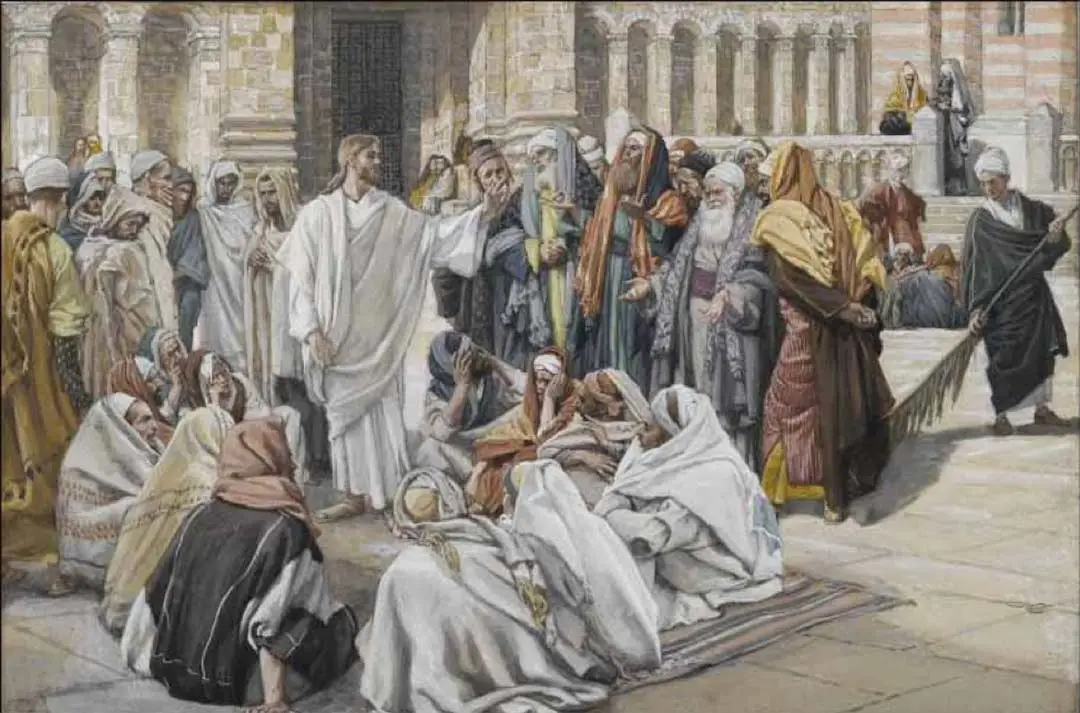
Jesus was asked about divorce. He started His answer by stating that God hated divorce. He said that God only gave Moses the ability to dissolve a marriage because He knew that if the couple did not separate, they would begin to commit adultery and make matters even worse. Here then is how a divorce can be righteously achieved in the eyes of God.
Obviously if a spouse dies, the surviving spouse is allowed to remarry. If one spouse abandons the other either by moving away, or continues to live in the community but does not have any relationship with the spouse, does not acknowledge them nor provide for their well-being, then the offended spouse can file for a divorce and remarry (I Corinthians 7:15). By Old Testament Law, if a spouse has sexual relations with another person, this is grounds for immediate divorce. But the New Testament tells us that while adultery is a very serious sin, it is not necessarily grounds for an immediate divorce. Instead, it first commands emotional forgiveness from the injured spouse (Matthew 6:14-15). This ability to forgive can provide the opportunity for reconciliation. True reconciliation can only legitimately occur when the unfaithful partner displays true repentance, immediately stops this type behavior and genuinely attempts over time to rebuild trust. This then is the preferred choice for Christians as opposed to the Old Testament Law of automatic divorce. However, if the person commits this sin a second time, they are now to be considered a repeat offender. The offended spouse should still forgive them emotionally, but could now rightly consider filing for divorce and legitimately remarry.
Commentary on Divorce
Matthew 19:5 "...for this cause (marriage} a man will leave father and mother and will {now} cleave {bond} to his wife: and they twain {both} will {now} be {seen as} one flesh {entity}." That is, two individual people will now be seen as a permanent couple. Just as the Triune Godhead is composed of three separate entities but is to be recognized as one united force.
Matthew 19:6 "Therefore they are no more two but one flesh {entity}. Therefore, what God has joined together {in the institution of marriage}, let no man {person} put asunder {by divorce or extramarital affairs}.
Matthew 19:7 "...why did Moses then command to give a writing decree of divorce {a get} and put {send} her {spouse} away?"
Matthew 19:8 "...Moses because of the hardness of your {mankind's} hearts allowed you {the ability} to put away {divorce} your wives {spouses}; but from {in} the beginning {Adam & Eve} it was not so {allowed}."
Matthew 19:9 "... I say to you, whoever will put away his wife {spouse}, except for fornication and will marry another, commits adultery: and whoever marries her {the ex spouse} which is put {sent} away commits adultery."
In Matthew 19:9, Jesus has included the legal qualifier "except for fornication". The definition of fornication is all sexual relations outside of marriage. Therefore, if the offending spouse was to have committed fornication, the innocent spouse would be allowed to commission and receive a 'get' {Jewish bill of divorce} issued under the authority of a rabbinic tribunal, and remarry free from the charge of adultery.
Further, should a couple begin to experience a series of extreme irreconcilable differences including intense verbal or physical conflicts leading to safety concerns or abuse without committing the sin of fornication, they would also be allowed to divorce as this would qualify as a form of abandoning the marriage vows (I Corinthians 7:15).
Paul writes, "But if she {an innocent spouse} is {physically} forced to depart {leave the domicile}, let her remain unmarried {act or reconciliation} or be reconciled to her husband {spouse}: and let not the husband {spouse} put away his wife {but instead reconcile}." (I Corinthians 7:10-15) Meaning, if an innocent spouse is forced to leave, they should remain single with the goal of reconciliation. Paul refers to this as a time of separation in order to calmly work through marital issues. Further, if one spouse resolutely abandons the other, the abandoned spouse can apply for a get and remarry (I Corinthians 7:10-11).
Moses realized that by not allowing for divorce, a couple would stay married but one or both could enter into adulterous relationships. There was also the issue of one spouse completely abandoning the other (Exodus 21:10-11). These issues were extremely detrimental to the moral well being of the community. Therefore, Moses instituted the issuance of a divorce decree known as a get. While not a legal binding part of the Jewish divorce, it was expected that the spouse who committed an offense or initiated the get should first meet with the innocent ex-spouse and seek forgiveness for an offence before remarrying. The innocent spouse may or may not forgive the offending spouse, but a godly person was expected to do so. Reason being, if God can forgive a person for a lifetime of sins, certainly a person can forgive another for their sin against them. This is not to say that the offended spouse will be able to completely forget the offense, but only that they forgive and move on (Ephesians 4:32).
That said, while the offender may be forgiven by their spouse and receive a divorce decree from the state, this does not mean God has forgiven them. The offender must also personally repent of their sin against God. In other words, while God is very proud of the victim that has shown forgiveness, He now has His eye firmly focused on the unrepentant offender. The offender has in effect offended God as author and primary witness to the vow made to Him. Once the offender has repented to God and asked the spouse for forgiveness, he or she can legitimately remarry. If they do not personally repent to God and apologize to their ex spouse, they can remarry according to the laws of man, but God will not recognize the marriage as legitimate. Therefore, the offending unapologetic and unrepentant spouse is now considered an adulterer (Matthew 19:9). This is because the original marriage is still binding in the eyes of God and by the offender now remarrying, they are committing polygamy.

So as you can see, the Bible does not treat divorce lightly. And the New Testament does not approve of divorce as the automatic first recourse of action to a sin committed by a spouse. All people are human and can make bad decisions. God is more than capable of reforming any person who genuinely wants to reform. God is capable of renewing a loving marriage if the couple is open to the idea. The blush of love‘s first kiss will always wane in time. Therefore, it is incumbent upon the couple to work through disagreements and not simply shake hands and walk away.
Bottom line, a legitimate divorce in the eyes of God can only occur in instances of death, abandonment or the habitual comitting of abusive and immoral sins.
If you enjoy the information provided on this site, please consider making a donation of any amount to help continue its production. Donate Now